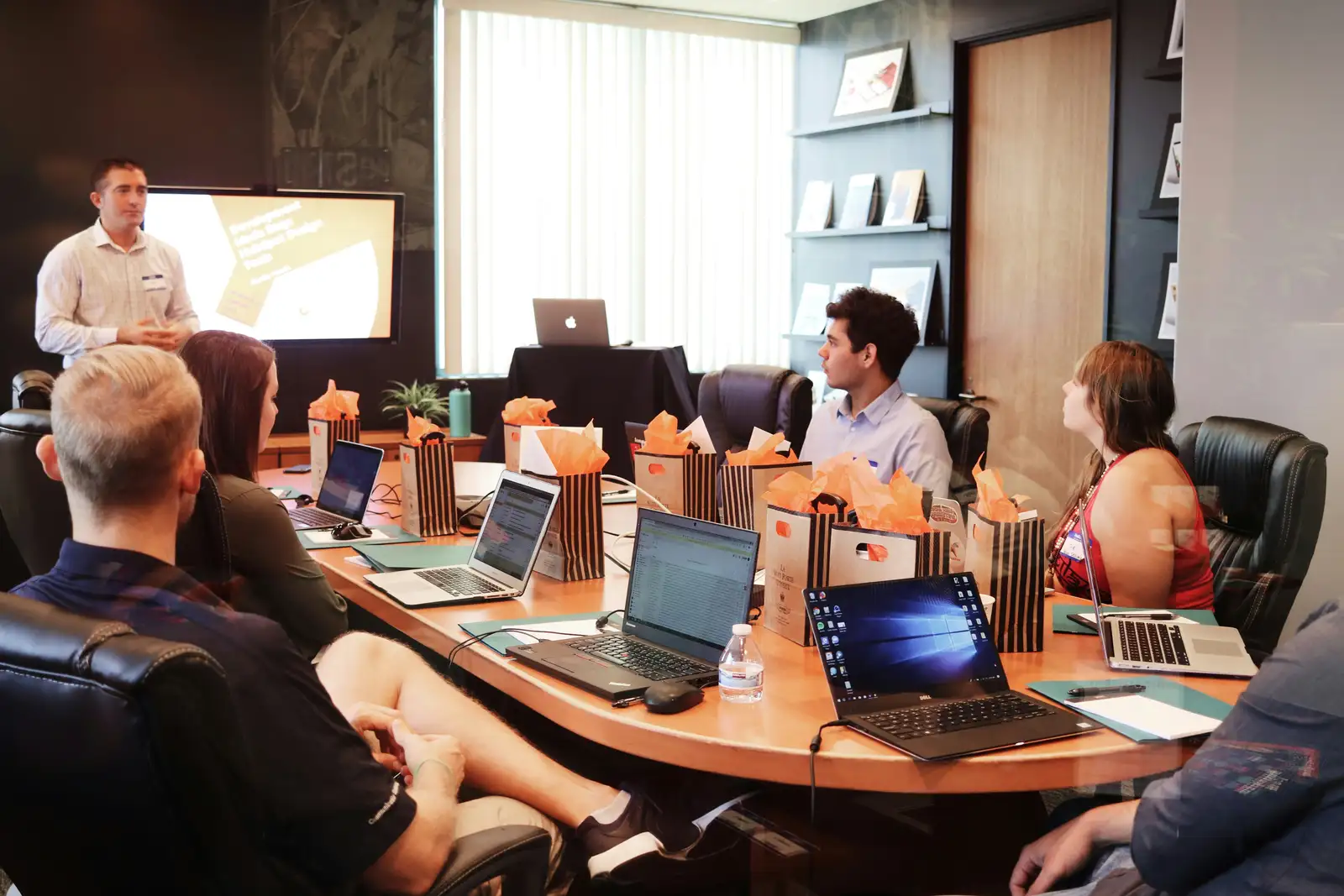

A CEO I worked with last spring described her leadership team as "aligned on paper." Eleven executives, one strategy deck, zero disagreement in meetings. Six weeks later, three of them were executing completely different versions of the same initiative. Nobody had lied. They'd just nodded at the same slide while picturing different outcomes.
That's the problem most executive offsites are built to solve, and most of them don't solve it. They solve for a good time. A nice hotel, a team dinner, maybe a hike, and everyone flies home having enjoyed each other's company without actually resolving anything that was quietly broken before they left.
I've been designing these retreats in Europe for two decades now, mostly for leadership groups of a dozen to twenty-four people. The ones that actually shift how a team operates share a structure. Not a vibe. A structure. This guide walks through how to build that agenda, specifically for 2026, when hybrid leadership teams and compressed decision cycles have made real alignment harder to fake.
Alignment Isn't a Feeling, It's a Decision
Here's where most planning goes wrong from the start: someone defines the goal as "getting the team aligned," and nobody defines what alignment would actually look like if it happened.
Alignment isn't a mood. It's a set of shared, specific answers to questions that were previously ambiguous. Before you build a single session, you need to know: what decision does this group need to make together, and what does disagreement currently look like on that decision?
If you can't answer that in one sentence, the agenda you build will default to generic team-building, and generic team-building produces generic results. Pleasant. Forgettable. Gone by the following Monday.
Harvard Business School's research on executive team dynamics has pointed out for years that misalignment at the leadership level rarely comes from disagreement people are aware of. It comes from unspoken assumptions that each executive believes everyone else shares. An offsite's job is to surface those assumptions in a room, not to paper over them with a cooking class.
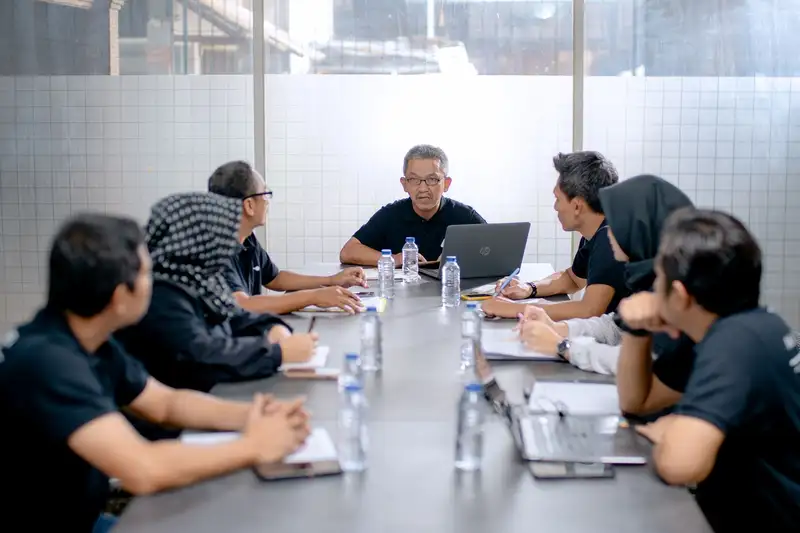
The Diagnostic Before the Agenda
I ask four questions before I build anything for a client. If you're planning in-house, ask them yourself, and be honest about the answers.
What decision is currently stuck? Not "what should we discuss" but what specific choice has been delayed, argued around, or quietly avoided for the last two quarters.
Who disagrees, and do they know it? Sometimes disagreement is loud and everyone's aware of it. More often it's silent, and two VPs have been operating on incompatible assumptions without either one realizing.
What's the cost of staying misaligned? Be specific. Missed launch date, duplicated engineering work, a sales team pitching two different value propositions. If you can't name the cost, the leadership team may not feel enough urgency to do the harder work.
What would visible alignment look like on day three? A shared decision. A written commitment. A joint plan with owners and dates. Not a feeling of closeness. An artifact.
That last question matters more than people expect. If your offsite doesn't produce something concrete, i.e. a decision, a document, a commitment made in front of peers, you've run an expensive retreat, not an aligning one.
The Architecture of an Aligning Agenda
Once you know the decision you're solving for, the structure follows a pattern I've used across dozens of these programs, whether the group was meeting in a farmhouse outside Siena or a quinta above the Douro.
Day One: Arrival and Diagnosis
Resist the urge to start working immediately. People who've just flown in from Chicago or Austin are running on travel adrenaline, not judgment. Let the first evening be low-stakes: a shared meal, minimal structure, maybe a short walk through wherever you've landed.
But build in a small diagnostic exercise before dinner, something low-pressure that surfaces where people actually stand. I've used a simple written exercise: each executive writes, anonymously, what they think the group's biggest unresolved disagreement is. You read them aloud before the meal. It's remarkable how often eleven people write the same thing in different words, and how rarely anyone had said it out loud in a normal meeting.
Day Two: The Working Core
This is where the real session happens, and it should be the only heavily structured block of the entire retreat. Two to three hours, one clear output. Not "discuss go-to-market strategy" but "leave this room with a written decision on which two markets we enter in Q2, and who owns each."
Bring in an outside facilitator if the disagreement runs deep or involves the CEO directly. A facilitator who isn't reporting to anyone in the room can ask the question nobody internally is willing to ask.
The afternoon should shift into something physical and shared. I ran a program for a European company's leadership team a few years back where we split the group and had them work through a wine harvest activity outside Montalcino, no phones, working with their hands alongside people they'd normally only see across a conference table. What gets said during two hours of physical, slightly uncomfortable, collaborative work is different from what gets said in a meeting room. It's not magic. It's just that shared effort loosens the performance people bring to work conversations.
One client I worked with, planning a 50th anniversary leadership program for thirty-three executives, split the group into four teams, took away their phones, and handed them paper maps for a navigation exercise across the city. The point wasn't the maps. It was watching who took charge, who deferred, who got frustrated and shut down, and then talking about it that evening in terms everyone recognized from actual meetings back home.
Day Three: Decision and Departure
Short morning, no heavy lifting. This is when you return to the output from Day Two, not to redo the work, but to confirm it in front of the group. Say it out loud. Write it down. Assign names and dates.
Then debrief, properly, before anyone starts thinking about flights. More on that below.
The 60/40 Rule, Adjusted for Leadership Groups
For most offsites I recommend scheduling roughly 60% of the time and leaving 40% open, since unstructured time is where trust actually gets built. For leadership-specific alignment retreats, I tighten that slightly, closer to 65/35, because the structured decision-making block needs protected time and a hard deadline. But the instinct to fill every hour is still the wrong one.
Executives, more than almost any group I work with, resist unscheduled time. They feel like idle hours are wasted budget. The opposite is usually true. The side conversation on a walk between sessions, the extended dinner where two people who've been avoiding each other finally talk, that's not filler. That's the alignment happening in real time, off the agenda.
Protect that space.
Facilitation: Who's in the Room Changes Everything
A generic facilitator, no matter how skilled, can't do what someone who's been briefed on the actual dynamics can do. Before any session, I want to know who dominates conversations, who goes quiet under pressure, and where the real tension sits, not the tension people admit to in a pre-retreat survey, but the one everyone else can see.
That briefing conversation, usually with whoever is sponsoring the retreat internally, is worth more than almost anything else in the planning process. It's also the part most companies skip, because it requires someone to say uncomfortable things about their own leadership team to an outsider. Do it anyway.
Measuring Alignment, Not Just Satisfaction
This is where most executive retreats fall apart after the fact. Everyone flies home saying it was great. Three months later, nobody can point to what actually changed.
Decide what "aligned" looks like before you leave, not after. Gallup's research on workplace relationships has consistently found that the quality of connection between colleagues predicts retention and performance more reliably than almost any other factor, which means the informal parts of a retreat aren't soft add-ons. They're measurable inputs.
I've found the companies that get real value from these programs measure three things: whether the decision made on Day Two actually got implemented within 90 days, whether the specific disagreement identified on Day One resurfaced or genuinely resolved, and whether the group's own self-reported trust in each other changed from before the trip to some fixed point after.
I've seen operators build measurement systems that start well before departure and run long after everyone's home: a baseline read on team cohesion before the trip, informal pulse checks during the program, and tracking that continues for months afterward rather than stopping at a checkout survey. Some of the small-group specialists working in Europe, operators like Culture Discovery Vacations who focus exclusively on programs under twenty-five people, have started building this kind of arc directly into their offerings, which tells you something about where the industry is heading. A satisfaction score at the airport gate was never going to tell a CFO whether the trip changed anything.
Why Europe Changes the Calculation
None of this architecture requires Europe. But the setting does more of the work than most planners give it credit for.
A group meeting in a hotel conference room in New Jersey is still, mentally, at the office. A group meeting in a converted olive mill outside Lecce or a stone farmhouse in the hills above Barcelona has already left, before a single session begins. The physical distance from the familiar does relational work you'd otherwise have to manufacture through activities alone.
There's also the practical case: European time zones mean a group can work a normal day and still be reachable by U.S. offices in the morning, without the six-to-nine hour gaps that make Asia-Pacific retreats a scheduling headache. Spain and Portugal, in particular, offer a favorable cost basis compared to comparable properties in the U.S., which matters when a board is asking why the leadership team needs to fly across the ocean at all. Italy's official tourism resource, italia.it, is a reasonable starting point for understanding regional infrastructure differences if you're weighing Tuscany against Puglia for a group this size.
Practical Application: Timeline and Budget
Twelve weeks out. Run the diagnostic conversation with whoever's sponsoring the retreat. Define the specific decision you're solving for. Choose a destination that matches the tone you need, quiet and rural for deep strategic work, urban and energetic if you're building momentum around a launch.
Ten weeks out. Lock the venue. For a group of 24 or fewer, you have real flexibility here, private villas, small boutique properties, working farms with a few extra rooms. Confirm there's at least one flexible indoor space for the Day Two session and informal gathering areas that don't require a reason to use them.
Eight weeks out. Brief your facilitator on actual dynamics, not job titles. Send this in writing if you can, it's easy to soften things in a phone call that need to stay specific.
Six weeks out. Send a short pre-retreat note to participants. Not a formal memo. A real note from whoever's leading the retreat, explaining what to expect and why. People arrive more open when they're not guessing.
Two weeks out. Confirm the physical logistics, transportation from arrival points, weather contingencies for outdoor activities, dietary requirements. For groups this size, these details are manageable directly with the venue rather than through layers of subcontractors, which is a real advantage of working with a single on-the-ground operator instead of a broker with no local staff.
Budget guidance. For a group of 24 or fewer over three days in a mid-tier European destination (Umbria, the Algarve, inland Catalonia), all-in costs including lodging, meals, activities, and facilitation typically land somewhere between $3,000 and $6,500 per person, depending heavily on venue exclusivity and whether you're bringing in outside facilitators or measurement support. Flights are usually the largest variable and the one companies underestimate most.
Key Takeaways
- Alignment is a decision, not a feeling. Define what "aligned" looks like as a specific output before you build a single session, or the retreat will default to generic team-building.
- Schedule roughly 65% of leadership retreat time, and protect the rest. The unscheduled conversations often carry more weight than the structured ones.
- Brief facilitators on real team dynamics, not job titles. A facilitator working blind can't ask the question that actually needs asking.
- Measure specific outcomes, decision implementation at 90 days, whether the identified disagreement resolved, changes in self-reported trust, rather than settling for a satisfaction score at departure.
- The debrief is not optional. Thirty structured minutes connecting the experience back to real workplace dynamics is what turns a good trip into a useful one.
Closing
The agendas that actually align leadership teams tend to share the same bones: a clear decision defined before departure, one heavily structured working session with a real output, and enough open space for the informal conversations that do half the real work. Everything else, the venue, the activities, the meals, exists to support that structure, not replace it.
Europe makes this easier than people expect, mostly because the distance and the setting do relational work before you've planned a single session. A leadership team spending three days somewhere genuinely unfamiliar, whether that's a working farm in Puglia or a quinta above the Douro, arrives at the hard conversations faster than one meeting in a hotel conference room back home.
But the structure still matters more than the setting. For a closer look at building the actual hour-by-hour agenda once you've landed, the guide on crafting the perfect agenda for your executive offsite walks through templates and timing in more detail. And if transportation and on-the-ground logistics are still an open question, mastering logistics and transportation for executive offsites is worth reading before you lock a venue.
Start with the decision you're trying to make. The agenda follows from there.



Comments (0)
No comments yet. Be the first!