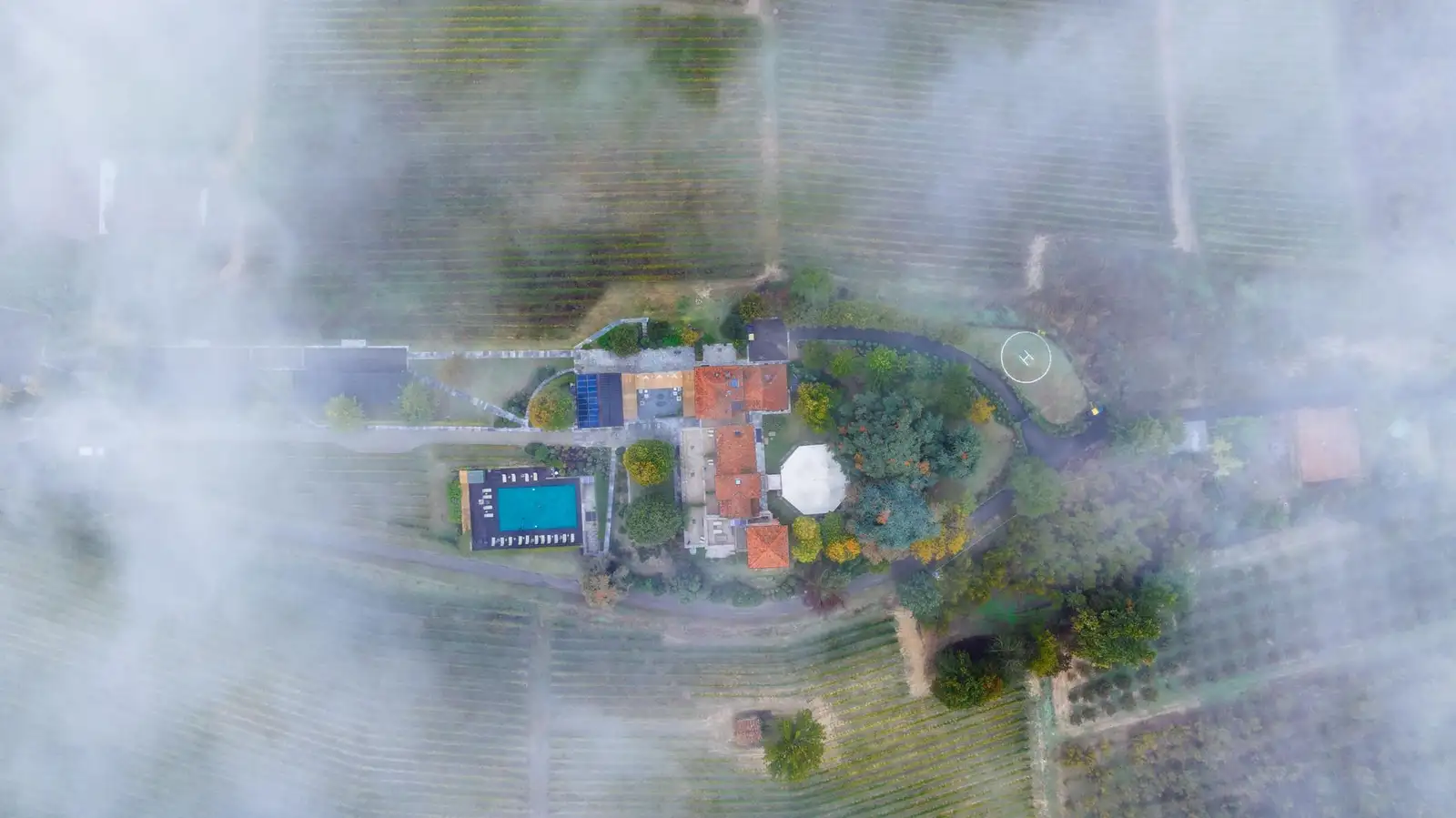

Picture this: your leadership team is standing at the edge of a Tuscan vineyard at 7am, arguing, productively, about go-to-market strategy while the morning fog lifts off the hills. Nobody is checking their phone. Nobody is thinking about the office. The conversation is the best one they've had all year, and it's happening because the place itself made it possible.
That's the thing about adventure venues. They don't just host your retreat. They do some of the work for you.
Summer is when most companies schedule their big offsites, and it's also when the most predictable retreats happen. The beach resort with the predictable buffet. The hotel conference room with floor-to-ceiling windows looking out at a pool nobody uses. Groups arrive, sit through sessions, and leave roughly unchanged. The venue was chosen for its capacity and its proximity to an airport, not for what it might do to a team.
This guide is about choosing with intention. It's about adventure venues across Europe that create the conditions for substantive work, genuine connection, and measurable change: for groups of 24 or fewer, where that kind of intentionality is achievable.
What Makes a Venue "Adventure-Ready"
Before getting into locations, it helps to be precise about what "adventure" means in a corporate retreat context. It doesn't mean extreme sports or manufactured adrenaline (though those have their place). It means a venue that creates mild, productive disorientation: places where your team feels genuinely outside their normal context.
That disorientation is the mechanism. When people are slightly off-balance, slightly uncertain, slightly outside their usual roles, they behave differently. Hierarchies flatten. The VP who dominates every meeting at the office is just another person trying to navigate an unfamiliar olive grove. The quiet analyst turns out to be excellent at reading a nautical chart.
A good adventure venue does three things consistently:
It has character that can't be manufactured. A 15th-century agriturismo in Umbria has two centuries of wear in its stone floors. A private masseria in Puglia smells like sun-dried tomatoes and old wood. These sensory details do relational work that no amount of team-building programming can replicate.
It creates shared physical experience. The best venues have terrain: hills to walk, water to sail on, kitchens to cook in, forests to move through. Shared physical activity compresses trust-building in ways that seated sessions simply don't.
It forces some degree of collaboration. Whether that's navigating an unfamiliar landscape together, sharing a communal meal that took four hours to prepare, or working out logistics in a place where nobody speaks English fluently: friction, managed well, builds cohesion.
Six Venue Categories Worth Considering
Working Farms and Agriturismo Properties
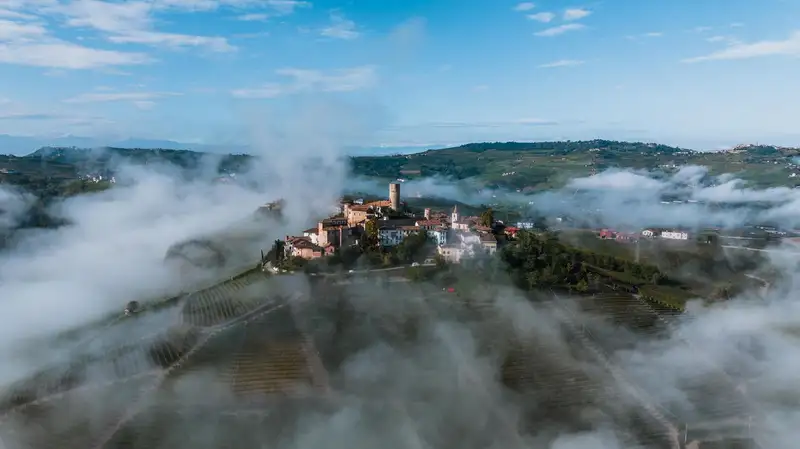
Italy leads here, though Spain and Portugal have strong equivalents. A working farm (one that produces something, wine or olive oil or cheese) gives groups an activity infrastructure that's already built in. The harvest is happening regardless of whether your team is there. You're joining something real, not attending something staged.
In Tuscany, harvest season runs September into October, which overlaps with the tail end of summer retreats. But even in July and August, farms offer cooking classes with estate-grown ingredients, cellar tours, and the kind of long communal dinners that don't happen anywhere else. For groups of 12 to 20, many agriturismo properties offer full buyouts: meaning your team has the place entirely to yourselves.
I've found that the buyout arrangement changes the dynamic considerably. No other guests means your team can be loud, can sprawl across the terrace, can hold a late-night debrief around a fire without worrying about bothering anyone.
The practical consideration: many of the best properties don't have dedicated conference infrastructure. You'll want to ask about presentation capability, reliable Wi-Fi, and whether there's a space that can function as a meeting room. Some properties have invested in this; others haven't.
Coastal Sailing Bases
Croatia's Dalmatian Coast has become one of the most interesting venues for summer corporate retreats in Europe. The infrastructure is excellent, the sailing conditions are manageable for non-sailors with proper instruction, and the combination of island-hopping and structured time together creates a retreat rhythm that's hard to replicate on land.
The format that works best for groups of 12 to 24 involves chartering two or three smaller vessels rather than one large yacht. Smaller boats mean smaller sub-groups, which means more intimate conversation. You can design the fleet to split teams in ways that serve your group dynamics, then reconvene at anchor for meals and evening sessions.
Portugal's Algarve and the Setúbal Peninsula offer similar sailing-based options, with the added advantage of the Atlantic swell and dramatic coastal scenery. The Algarve coastline in summer is warm, reliably sunny, and well-served by Faro airport: making logistics considerably simpler than some of the more remote Croatian islands.
What makes coastal sailing work as an adventure venue isn't the sailing itself. It's the enforced proximity. Fourteen people on two boats, sharing meals at anchor, making collective decisions about where to go next: that's a trust-building environment.
Mountain Refuges and High-Altitude Properties
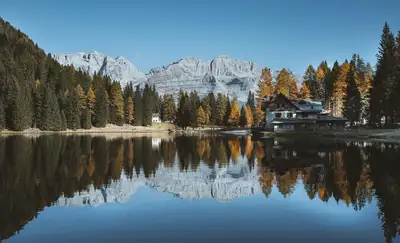
The Alps, the Pyrenees, the Dolomites: summer in Europe's mountain ranges offers a rare gift for corporate groups: cool air, dramatic scale, and a pace of life that's structurally incompatible with constant connectivity.
Properties at altitude tend to have intermittent Wi-Fi, which I'd argue is a feature rather than a bug for a summer retreat. The physical scale of mountains does something to human psychology that's hard to articulate but easy to observe. Conversations get more honest. The small stuff stops feeling important. A team that spends three days hiking between refuges in the Dolomites comes back with a different relationship to their work problems.
For groups with mixed fitness levels, the Bavarian Alps and the Austrian Tirol have excellent infrastructure: proper roads, well-maintained trails graded by difficulty, and properties that can accommodate people who want to hike hard alongside people who'd rather sit on a terrace with a book. That flexibility matters when you're planning for a mixed group.
The practical note: mountain venues often have limited capacity for formal presentations. Plan your working sessions around the property's actual strengths rather than trying to run a standard offsite format in a setting that wasn't designed for it.
Historic Estates and Converted Castles
Spain and Portugal have an unusual density of historic properties that have been converted for private events and retreats, paradors, quintas, and manor houses that offer both the physical infrastructure for working sessions and environmental drama that makes a retreat feel distinct.
A converted castle in the Alentejo region of Portugal, for instance, might offer stone-walled meeting rooms, private gardens, a working winery, and accommodation for 20 guests. The history is ambient rather than didactic; it doesn't require anyone to care about 12th-century architecture to benefit from being inside it.
What these properties do well is create a sense of occasion. Your team knows they're somewhere that took centuries to build. That awareness, even if it's subconscious, tends to make people behave with a bit more care, more deliberate in conversation, more present at the table.
Research on environmental psychology from Harvard Business Review has documented how physical surroundings affect cognitive performance and social behavior. Historic environments with distinct character appear to increase attentiveness and reduce the kind of distracted, half-present behavior that plagues most corporate meetings.
For summer retreats, look for properties with thick stone walls and courtyard gardens. They stay naturally cool in July and August without aggressive air conditioning, which matters more than it sounds when you're trying to keep a group energized through afternoon sessions.
Forest and Wilderness Lodges
Scandinavia, Scotland, and the Basque Country all have excellent options in this category. A private forest lodge with lake access, kayaking infrastructure, and evening sauna culture creates a retreat rhythm that's entirely different from the Mediterranean options above, and it's worth being intentional about which environment fits your team's needs.
The forest lodge format tends to work particularly well for teams that spend most of their time in urban offices. The contrast is stark enough that people decompress within the first 24 hours, which means you get a more receptive group for any working sessions you've planned.
Sweden's approach to the work pause, what Swedes call fika, a cultural practice around shared coffee and rest, maps surprisingly well onto retreat culture. Building structured downtime into the agenda isn't a concession to the schedule; it's an investment in the quality of the time that follows.
The practical limitation of wilderness lodges is logistics. Getting 20 people to a remote Swedish lake house requires a coordinated transfer from Stockholm or Gothenburg, and any equipment or materials you need for working sessions has to travel with you. Plan the logistics carefully, and the remoteness becomes a feature. Get them wrong, and it becomes a stressor before the retreat has even started.
Urban Adventure Bases
Not every summer retreat needs to be rural. Barcelona, Lisbon, and San Sebastián all have neighborhoods, food markets, and cultural infrastructure that can function as adventure venues in their own right, particularly for groups doing multi-day urban programs combining working sessions with city-based activities.
The key distinction is using the city actively rather than passively. Hosting sessions in a hotel conference room and then wandering out for dinner isn't an urban adventure retreat; it's a city trip. An urban adventure retreat might involve a morning market session where the team sources ingredients for a group cooking activity, an afternoon navigating a neighborhood with a brief, and an evening debrief over a meal they made themselves.
San Sebastián (Donostia) is particularly well-suited to this format. The city has one of the highest concentrations of Michelin-starred restaurants per capita in the world, a genuinely walkable old town, and a coastline that's ten minutes from the center. For groups where food and culinary activity are meaningful team touchpoints, it's hard to beat.
Matching Venue Type to Group Dynamics
This is where most retreat planning goes wrong. The venue is chosen for visual appeal or because someone saw it in a travel magazine, rather than for fit with the group itself.
A few honest questions to work through before you commit:
What's the energy level of your group? A sailing-based retreat requires physical confidence and some tolerance for close quarters. A mountain hiking retreat requires reasonable fitness. If your group has significant variation in either, you need a venue with enough range to accommodate everyone without anyone feeling left behind or held back.
What's the primary goal of the retreat? If it's strategic alignment, you need proper working session infrastructure, reliable Wi-Fi, presentation capability, a room where people can sit for three hours without their backs giving out. If it's trust-building and informal connection, the infrastructure matters less than the environment and the shared activity.
How does your group handle unstructured time? Some teams thrive when the agenda has breathing room. Others get anxious and competitive. Knowing this about your group helps you choose between a venue that's activity-rich (where there's always something to do) versus one that's more contemplative.
What's the group's relationship to physical activity? Adventure venues work best when everyone can participate in the core activities at their own level. The best venues design around this naturally; others require you to create parallel programming, which adds complexity.
Practical Application: Building Your Venue Selection Process
6-8 months out: Define your non-negotiables. Capacity, accessibility, budget ceiling, and the single most important outcome. With those fixed, you can eliminate probably 80% of options before you've looked at a single property listing.
4-6 months out: Do a shortlist of five to eight properties, then request video calls rather than just brochures. The person you speak with will tell you more about the venue than any marketing material. Ask specifically: "What's the best retreat you've hosted here, and what made it work?" The answer reveals a lot.
3-4 months out: Visit your top two choices if possible, or request detailed reference calls with previous corporate clients. A venue that has hosted similar groups will have useful operational knowledge that a venue doing its first corporate retreat won't.
6-8 weeks out: Confirm all logistics, transfers, dietary requirements, any equipment or AV needs, and the exact schedule of shared spaces. For summer bookings, confirm again two weeks before arrival. Things change.
For groups under 24, the buyout option is almost always worth the premium. Having the property to yourselves removes a dozen small friction points and lets the team behave like themselves rather than like guests in a shared space.
Operators like Culture Discovery Vacations, who focus on small-group European settings, often have direct relationships with properties that don't appear in standard venue searches, including the kind of private estates and working farms that don't need to market themselves because they're booked through referrals.
For help building the financial case for a European adventure retreat, the Ultimate Guide to Budgeting for Executive Offsites has a solid framework for moving from "this sounds expensive" to a cost-per-outcome analysis.
Key Takeaways
The venue is the program. An adventure venue with strong character does relational and cognitive work before you've planned a single session. Choose for environmental impact, not just logistical convenience.
Buyouts change the dynamic. For groups of 24 or fewer, exclusive use of a property is often achievable and almost always worth it. The informal overlap that happens when a team has a space entirely to themselves is where trust actually builds.
Match venue type to group reality. A sailing retreat for a team with low physical confidence is a stressor, not a bonding activity. The best adventure venue is the one that creates productive challenge without leaving anyone behind.
Summer logistics require advance planning. The best adventure properties in Europe are booked 4-6 months out for peak summer. Start earlier than feels necessary.
Unstructured time isn't wasted time. The most valuable moments of any adventure retreat tend to happen between scheduled activities, at dinner, on a morning walk, sitting on a terrace after the formal session ends. Build that space in deliberately.
Closing
The retreat venues that teams actually remember, the ones that come up in conversation years later, tend to share a quality that's hard to put in a brief. They feel like somewhere, not anywhere. The Umbrian farmhouse with the three-hundred-year-old olive press. The Croatian island anchorage where the only sounds were water and conversation. The Alentejo quinta where the stone walls kept the heat out and the wine came from the vines you could see from your window.
These aren't luxuries in any frivolous sense. They're the mechanism. The environment is doing work that no agenda item can do on its own.
For groups of 24 or fewer, the opportunity is even clearer, because at that scale, you can design around your team rather than around generic corporate formats. That's where the return on investment lives. Not in the amenities checklist, but in what the place asks of your people, and what it gives back.
If you're still working through destination choices before locking in a venue, the guide to choosing the ideal destination for your executive offsite is a useful next step.

Comments (0)
No comments yet. Be the first!